
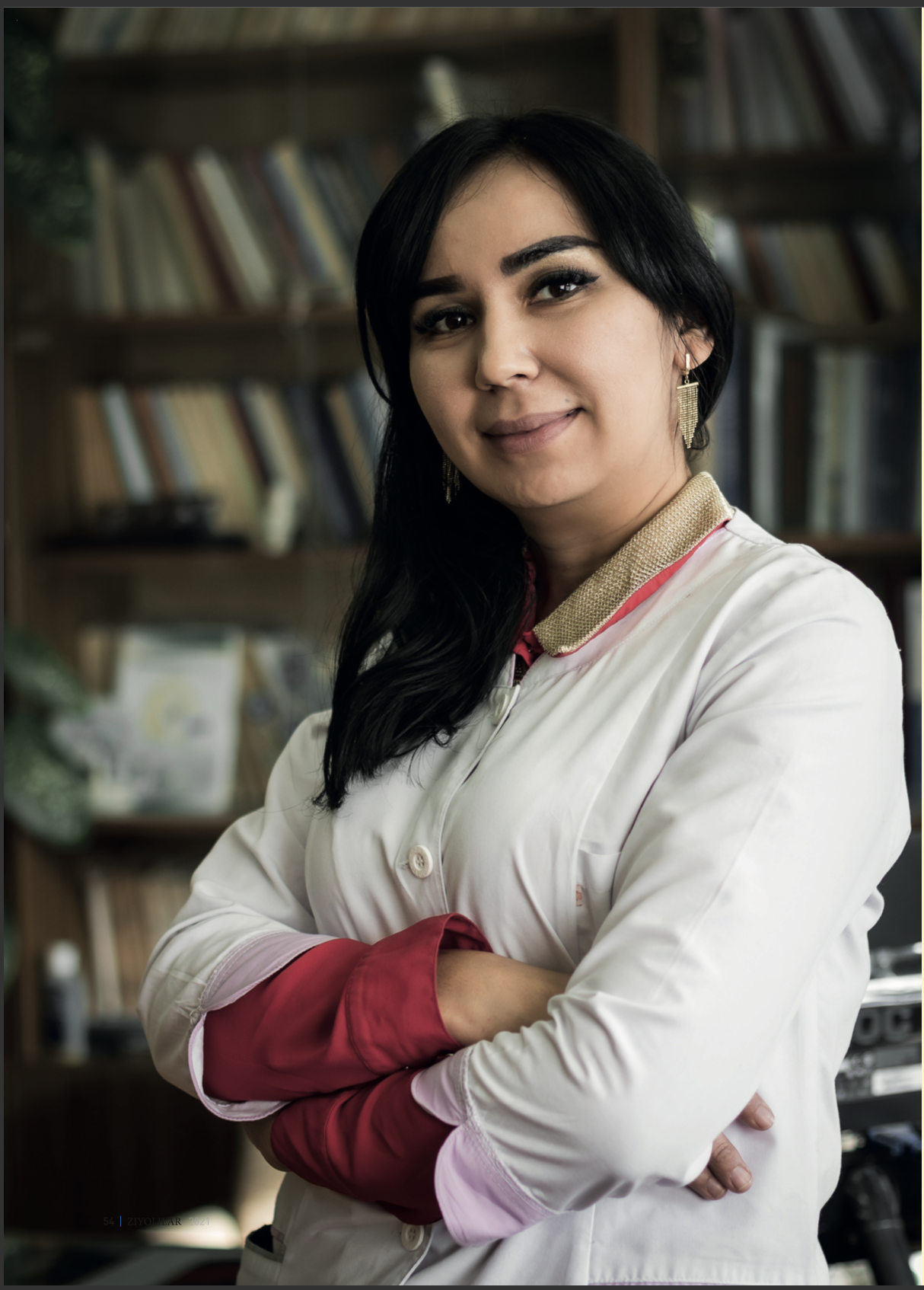
Vaxabova Nargiza
About the participant
Vakhabova Nargiza, 35, is a doctoral student at the Tashkent Medical Academy. As a researcher, she studies gender-based differences in the clinical presentation and treatment of ischemic stroke in elderly patients, as well as key hormonal indicators in men and women with acute ischemic stroke. Her project aims to prevent dementia and disability by improving ischemic stroke treatment. Nargiza developed a project on how the main risk factors for ischemic stroke differ by gender among elderly patients. She studied the effectiveness of treatment approaches in men and women with acute ischemic stroke based on key hormonal status indicators. The data she gathered has helped improve treatment methods aimed at halting or slowing the progression of neurological symptoms, as well as preventing the condition from advancing into dementia. Analysis of the research showed that the individual characteristics of male and female organisms differ fundamentally. Diagnostic studies had to account for hemodynamic indicators that vary sharply across life stages — youth, maturity, older age, and especially old age — factoring in these gender-specific differences. Nargiza completed her base doctoral program in the neurology department of the Tashkent Medical Academy and earned her PhD. She considers the day she successfully defended her thesis and received her diploma the brightest day of her life. She now plans to continue this research, saying there is still much more to study — all of it aimed at preventing disability.